Invisible Braces
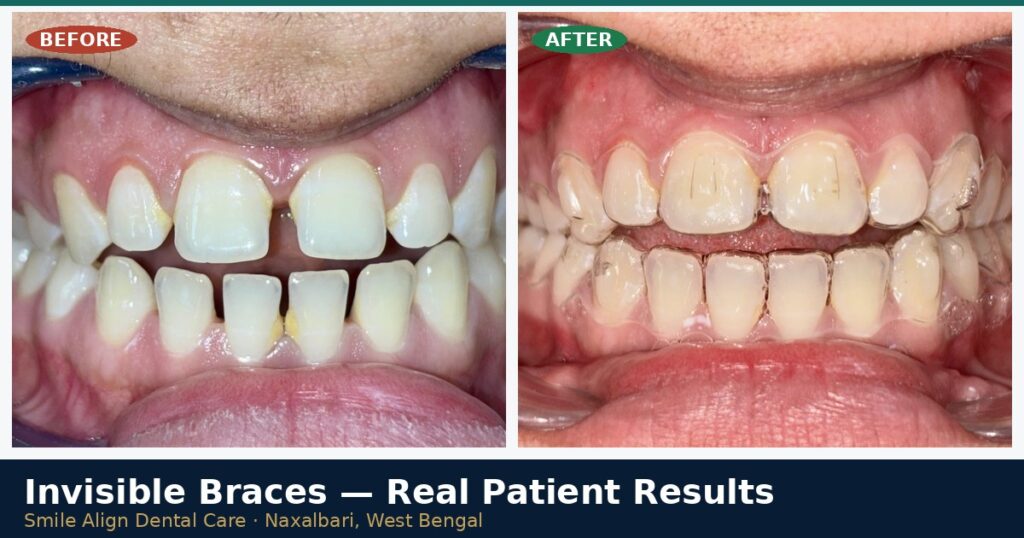
“Invisible braces” is the term most patients search for, but it actually covers a few different treatments — not one single product. This guide breaks down what invisible braces really are, how well they work according to actual research, what the popular brands cost in India, and what to expect if you’re considering them.
What Are Invisible Braces?
Invisible braces is an umbrella term for any orthodontic treatment designed to be far less noticeable than traditional metal braces. In practice, it usually refers to one of three options:
| Type | What It Is | Visibility |
|---|---|---|
| Clear aligners | A series of removable, custom-fitted transparent plastic trays, swapped every 1–2 weeks | Very low — the option most people mean by “invisible braces” |
| Ceramic braces | Fixed brackets and wires like traditional braces, but in tooth-coloured or clear material | Low — noticeable up close, blends in from a distance |
| Lingual braces | Traditional metal brackets fixed to the back (tongue side) of the teeth | Very low from the front, but can affect speech initially |
Clear aligners are by far the most commonly chosen option and the main focus of this guide. If you’re still weighing removable aligners against fixed braces generally, our braces-vs-aligners decision guide covers that broader decision.
How Clear Aligners Actually Work
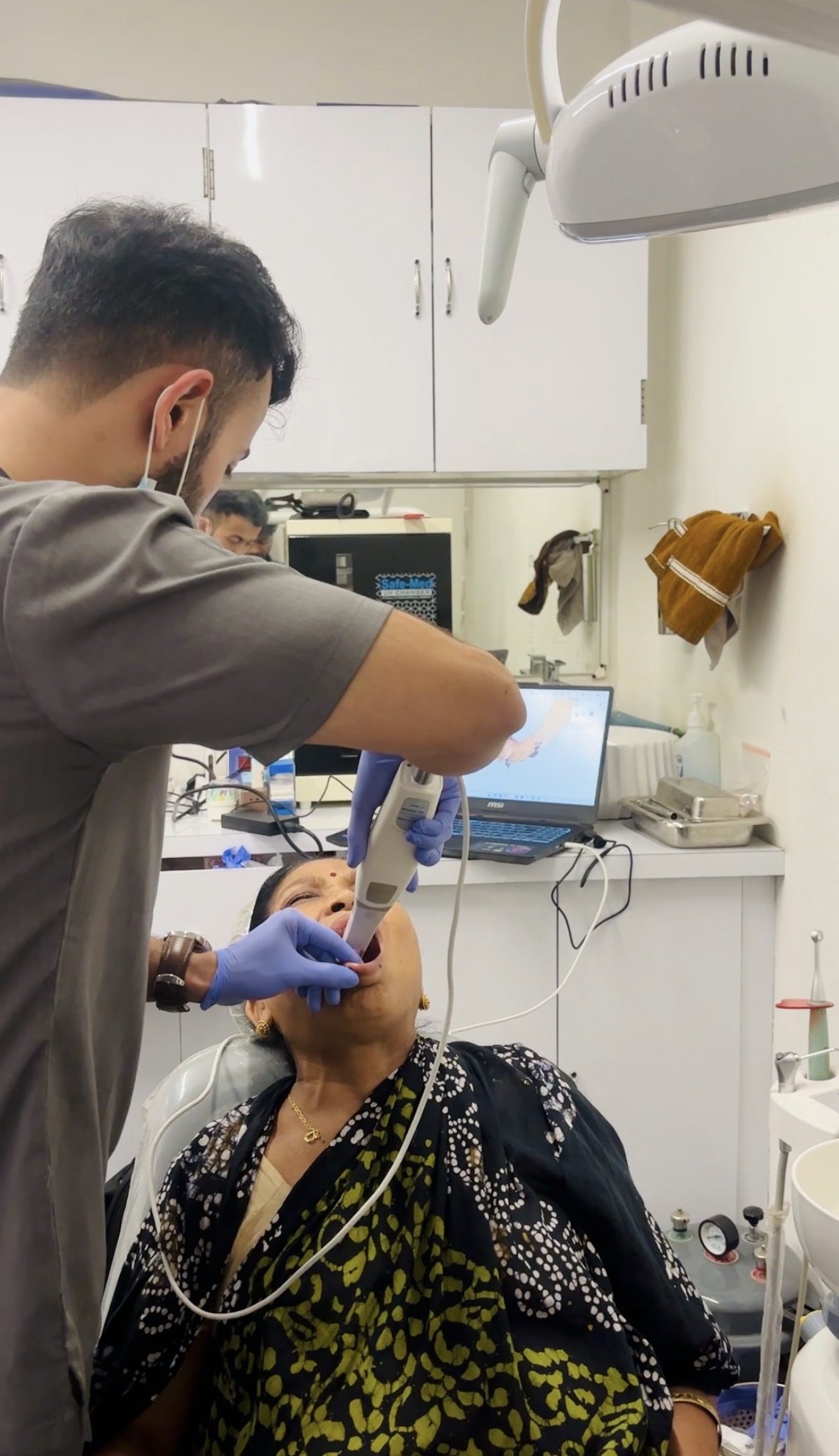
Treatment starts with a digital 3D scan of your teeth rather than the old-style putty impressions. That scan is used to plan a full sequence of tooth movements in advance, then manufacture a series of aligner trays — often 20 to 40 of them depending on your case — each one moving your teeth slightly further than the last.
Each tray is worn for about one to two weeks before moving to the next in the sequence. For treatment to work as planned, aligners generally need to be worn 20–22 hours a day — removed only for eating, drinking anything other than water, and brushing. This wear-time discipline is the single biggest factor separating a smooth treatment from a delayed one.
In-House 3D Printing — Faster Turnaround, More Control
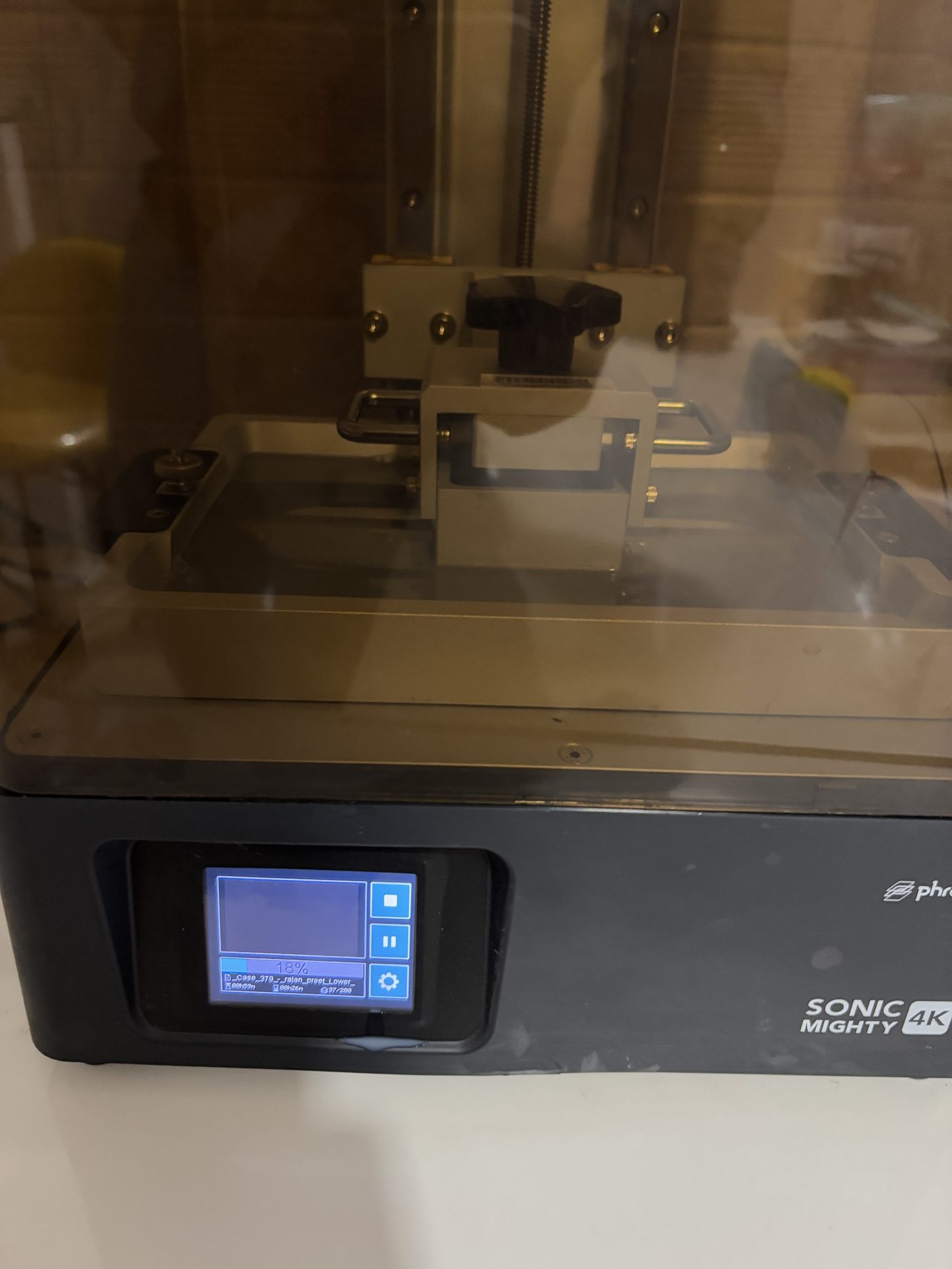
Many clinics outsource aligner model production entirely, which adds shipping time to every stage of treatment. Smile Align Dental Care runs its own in-house 3D printer for producing aligner models directly from the digital scan, cutting turnaround time between stages and keeping quality control in-house rather than dependent on an outside lab’s schedule.
Are Invisible Braces Right for You?
Clear aligners are well suited to mild-to-moderate crowding, spacing, and many bite corrections. Research and clinical experience both point the same direction: outcomes are most predictable for straightforward-to-moderate cases, while severe crowding, significant rotations, or complex bite corrections are sometimes better handled with traditional braces, or a combination approach. This isn’t a fixed rule — it depends on your specific bite — which is exactly why an in-person assessment with X-rays matters more than a brand name.
Success Rate — What the Research Actually Shows
Marketing pages love round numbers, so it’s worth looking at what controlled studies actually found rather than headline satisfaction stats alone. A 12-month prospective cohort study comparing clear aligner patients against fixed-brace patients tracked aesthetic satisfaction, comfort, and oral-health-related quality of life at multiple check-ins.
Aesthetic satisfaction at 12 months — clear aligners vs fixed braces
The same study found comfort scores significantly favoured clear aligners too, though overall oral-health-related quality of life ended up comparable between both groups by the end of treatment — meaning aligners tend to feel better during treatment, while final functional outcomes were broadly similar once treatment was complete. Separately, aligner manufacturers commonly cite patient-satisfaction surveys in the 90–96% range; those figures come from company-run or company-funded surveys rather than independent trials, so it’s reasonable to treat them as directionally supportive rather than a precise clinical statistic.
One more honest data point worth knowing: research comparing planned digital simulations against actual achieved tooth movement has found the two don’t always match exactly, with studies reporting a meaningful gap in some tooth movements — which is exactly why regular in-person check-ins during treatment matter, even though aligners feel like a “set it and forget it” product.
Popular Invisible Braces Brands Compared
The Indian clear aligner market has grown quickly, and now spans global premium brands, Indian-made mid-range systems, and budget-friendly options. Here’s how the major categories generally compare — and if you specifically want the deeper dive on the best-known brand, our detailed Invisalign-vs-generic aligner comparison looks at what genuinely sets it apart.
| Brand / Category | Positioning | Typical Price Range (India) | Best For |
|---|---|---|---|
| Invisalign | Global market leader; decades of clinical data and the widest case-complexity range | ₹1,20,000 – ₹2,00,000+ | Complex cases, patients who want the most established track record |
| ClearCorrect | International brand, positioned as a mid-to-premium alternative to Invisalign | ₹90,000 – ₹1,50,000 | Moderate cases wanting a known international brand at a lower price point |
| Clinic in-house brands (e.g. Whistle) | Manufactured by dental chains, orthodontist-planned, often bundling retainers into the price | ₹65,000 – ₹1,20,000 | Patients wanting orthodontist oversight without paying international brand pricing |
| Indian D2C aligner brands | Direct-to-consumer, remote-monitoring-led model; growing fast on price | ₹35,000 – ₹70,000 | Mild, straightforward cases on a tighter budget |
These are indicative market ranges, not fixed prices — the biggest swing factor within any brand is case complexity, not the logo on the box. A mild single-arch correction and a full-mouth bite correction can cost very differently even under the same brand.
Price Comparison — Invisible Braces by Tier
Typical starting price by treatment tier (India, 2026)
Based on aggregated 2026 pricing published across Indian dental providers; actual cost depends on individual case assessment.
Invisible Braces vs Traditional Metal Braces
| Factor | Invisible Braces (Clear Aligners) | Traditional Metal Braces |
|---|---|---|
| Visibility | Very low — most people won’t notice | Clearly visible |
| Removability | Removable for eating and brushing | Fixed for the full treatment |
| Food restrictions | None — remove before eating anything | Avoid hard, sticky, and chewy foods |
| Comfort | Generally rated more comfortable, especially early on | More noticeable pressure after adjustments |
| Best for | Mild-to-moderate cases | Mild to complex/severe cases |
| Relies on patient discipline | Yes — needs 20–22 hrs/day wear to stay on track | No — works continuously regardless of compliance |
| Typical cost (India) | ₹35,000 – ₹2,00,000+ | ₹25,000 – ₹80,000 |
What to Expect, Step by Step
The overall journey looks broadly similar across brands, whether it’s a global premium system or a clinic in-house brand:
- Consultation and assessment — X-rays and a bite examination to check whether your case suits aligners at all.
- Digital 3D scan — a full impression of your current teeth, used to plan every stage of movement in advance.
- Treatment plan preview — a digital simulation showing your projected tooth movement stage by stage before you commit.
- Aligner delivery and fitting — your first sets are issued, along with instructions on wear time and care.
- Periodic check-ins — typically every 6–8 weeks, to confirm teeth are tracking as planned and catch any deviation early.
- Retention phase — once active movement is complete, a retainer maintains the result — skipping this is the most common reason results shift back afterward.
Trained Specifically in Aligner Biomechanics
Not every dentist offering aligners has formal training in aligner-specific biomechanics — planning tooth movement through a series of trays is a different skill set from planning fixed-brace mechanics. Dr. Sourabh Dutta has completed dedicated aligner biomechanics training beyond his MDS in Orthodontics, specifically covering in-office aligner planning and case management.

Common Questions Patients Ask
Do invisible braces hurt? Most patients feel mild pressure for a day or two after switching to a new tray, not sharp pain. It’s usually far less noticeable than the tightening pain from traditional wire adjustments.
How long does treatment take? Most cases run 6–18 months, depending on complexity — mild cases can finish faster, while bite corrections take longer.
Can I eat normally? Yes — that’s one of the main advantages. Remove the aligners before eating or drinking anything besides water, then brush before putting them back in.
Will my teeth shift back afterward? Only if you skip wearing your retainer as instructed. This applies to every orthodontic treatment, not just aligners.
Is a cheaper brand automatically a worse choice? Not necessarily — price differences often reflect brand positioning and manufacturing origin as much as clinical capability. What matters more is whether the specific system is suited to your case, and whether an orthodontist is actually overseeing your treatment plan rather than a generic algorithm alone.
The Real Deciding Factor
Every comparison above matters less than one thing: whether your specific bite is a good match for aligner treatment, and whether the person planning it is qualified to catch problems early. A proper consultation — with actual X-rays and a bite assessment, not just a photo uploaded to an app — is the only reliable way to know your realistic treatment time, cost, and expected outcome before you commit to any brand.